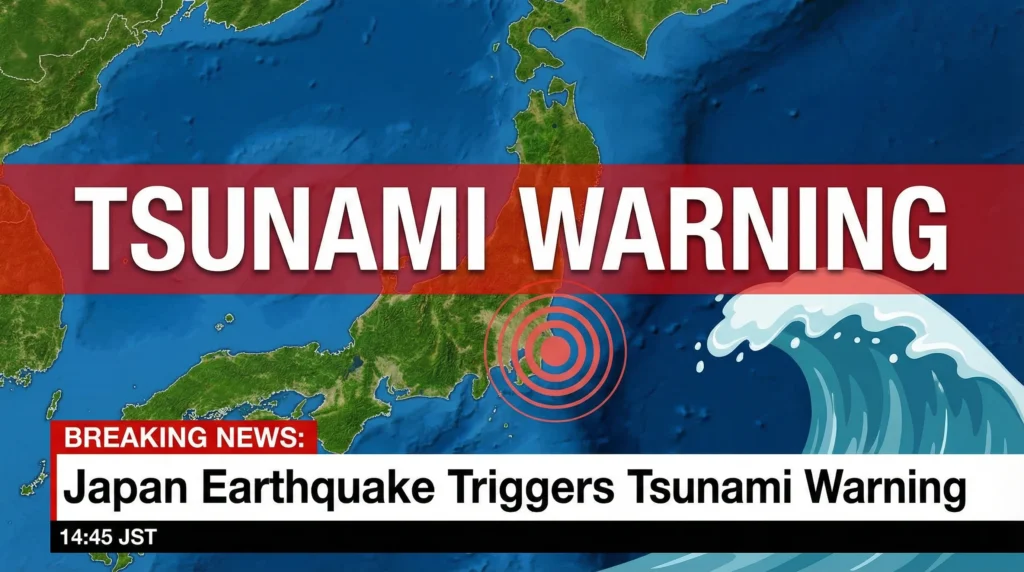

A powerful earthquake struck off the coast of Japan, triggering a tsunami warning and prompting evacuations in the region. The quake, which occurred on December 2025, was detected by Japan’s sophisticated earthquake detection system, which provides real-time data to the Japan Meteorological Agency (JMA). According to officials, the warning was issued promptly, allowing residents to take protective action swiftly.
Fortunately, no major damage or casualties have been reported, thanks to the effective tsunami evacuation protocols in place. The Japan Meteorological Agency played a crucial role in issuing immediate warnings, which were sent via mobile networks and broadcasters, utilizing Japan’s Earthquake Early Warning (EEW) system.
Japan’s location on the Pacific Ring of Fire makes it one of the world’s most earthquake-prone countries. The 2011 Tohoku earthquake and tsunami was a devastating event that exposed weaknesses in tsunami defense and nuclear safety, prompting the government to invest heavily in tsunami warning systems and infrastructure.
The Japanese government has emphasized the importance of public readiness, fast communication, and evacuation protocols in minimizing casualties and damage. Coastal areas have extensive tsunami evacuation routes, shelters, and regular drills, which have been instrumental in reducing fatalities in recent incidents.
The Cabinet Office Disaster Management Division coordinates government disaster preparedness and response efforts, while the Prime Minister’s Office releases statements on preparedness and post-disaster measures. Local governments enforce evacuation and public safety protocols following national warnings.
Japan’s disaster preparedness and response mechanisms have evolved significantly over the years, with a focus on earthquake early warning systems and tsunami warnings. The country’s experience and expertise in this area are globally recognized, with Japan participating in regional tsunami warning networks and collaborating with Pacific Rim countries.
As Japan continues to develop its earthquake detection and tsunami warning systems, the country remains committed to improving its disaster resilience and reducing the impact of seismic activity on its communities. With advances in seismic research and AI predictive models, Japan is poised to further enhance its warning systems and protect its citizens from the threats posed by earthquakes and tsunamis.