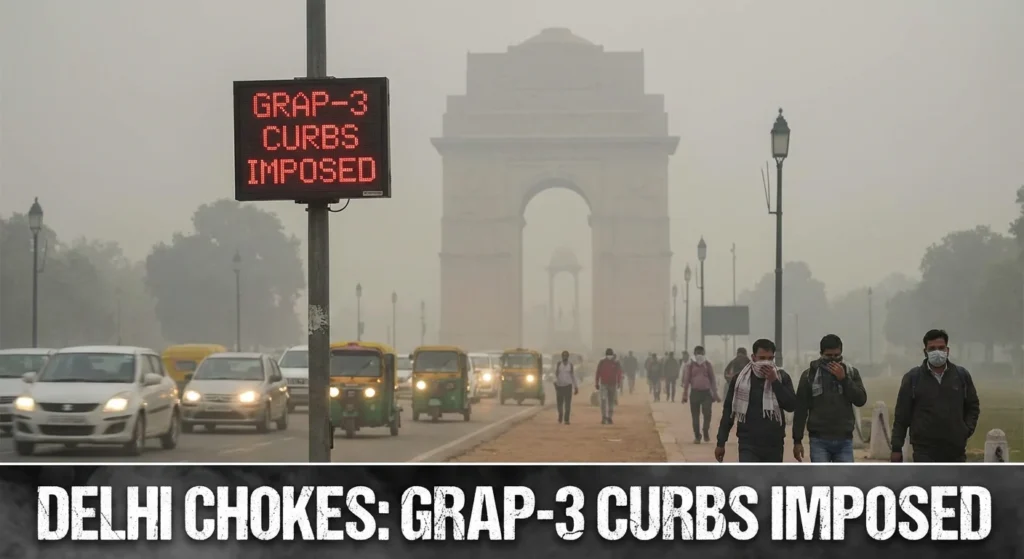

The air quality in Delhi has worsened to the severe category, prompting the imposition of GRAP-3 restrictions across the National Capital Region (NCR). The Commission for Air Quality Management (CAQM) has invoked the Graded Response Action Plan (GRAP) Stage 3, triggering wide-ranging restrictions on construction, industry, and vehicular emissions. This move has significant implications for the health and wellbeing of Delhi’s residents, particularly vulnerable groups such as children, the elderly, and those with respiratory or cardiac conditions.
The Delhi GRAP 3 restrictions include a ban on most construction and demolition activities, except for critical public projects. High-emission industries and diesel generator sets not classified as essential services will also be curbed. Additionally, mechanised road sweeping, water sprinkling, and enforcement drives against pollution sources will be intensified. Residents are advised to limit outdoor exposure, use air pollution health advisory measures such as masks, and avoid strenuous outdoor activity.
The CAQM pollution curbs NCR are part of a central framework that prescribes escalating measures as air quality worsens from “poor” to “severe+”. The decision to impose GRAP-3 was made after real-time air quality data showed AQI levels breaching the “severe” threshold, indicating dangerous particulate pollution levels. Authorities cited worsening meteorological conditions and increased emissions as factors contributing to the deterioration in air quality.
For more information on the Delhi winter smog crisis and the Graded Response Action Plan, visit NDTV India News for the latest updates and coverage. The construction ban in Delhi NCR is expected to have significant economic implications, particularly for real estate and construction firms, as well as small industrial units and informal sector workers.
The Delhi NCR anti-pollution measures are a critical step towards mitigating the adverse effects of air pollution on public health. However, the effectiveness of these measures will depend on the cooperation of residents, businesses, and government agencies. It is essential to address the root causes of air pollution, including Delhi air quality severe category episodes, to ensure a sustainable and healthy environment for all.
The Delhi GRAP 3 restrictions will be in place until the air quality improves. Residents are advised to stay informed about the latest developments and take necessary precautions to protect their health. By working together, we can reduce the impact of air pollution and create a healthier, more sustainable future for generations to come.
In conclusion, the imposition of GRAP-3 anti-pollution curbs in Delhi is a timely and necessary response to the deteriorating air quality in the city. It is crucial that we take immediate action to address the severe category air pollution and work towards a long-term solution to mitigate its effects on public health and the environment.
For more trending news from India category you may visit here.