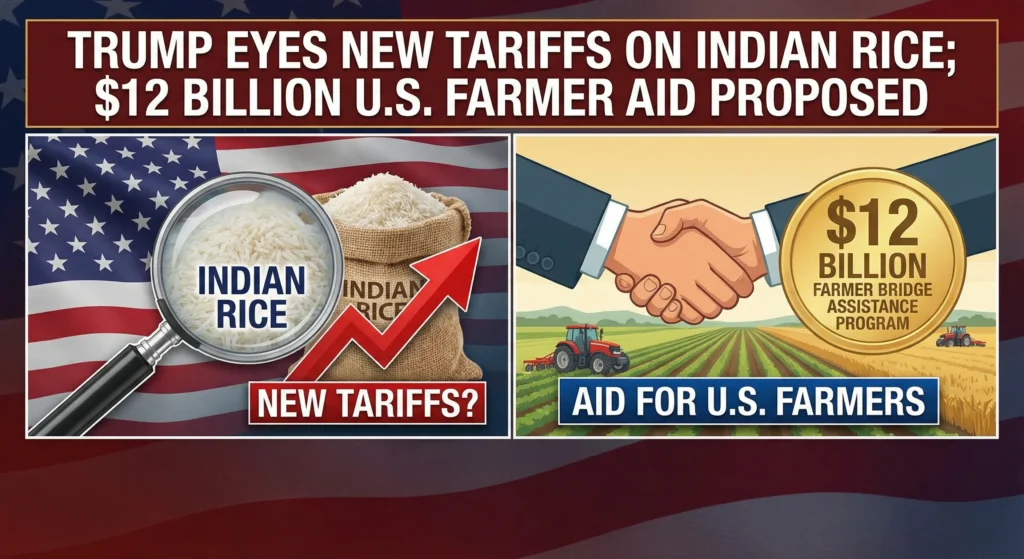

In a significant escalation of trade tensions, former U.S. President Donald Trump has signaled that his administration may impose fresh tariffs on Indian rice imports, citing allegations of unfair dumping that harm American farmers. This move follows the existing 50% tariffs the U.S. already applies to Indian rice, but farm groups and officials argue more measures are needed due to rising losses projected for U.S. rice producers in 2025.
Trump unveiled a $12 billion Farmer Bridge Assistance Program to support American farmers affected by these unfair market disruptions. The U.S. rice industry claims India, along with countries like Thailand and China, subsidizes exports, undercutting U.S. producers. The potential tariffs come amid ongoing trade negotiations and intensified pressure from agricultural stakeholders to level the trade playing field.
American rice farmers face significant financial losses, with 2025 projected losses reaching $364 per acre and production costs rising sharply, potentially causing stress on farm viability. The U.S. rice industry argues that despite tariffs, subsidized imports continue to pressure domestic producers. WTO disputes have been launched in the past regarding subsidy policies, indicating complex multilateral tensions.
The Farmer Bridge Assistance Program announced alongside trade and export expansions with countries like Japan, Indonesia, EU, and others in 2025 to bolster multiple U.S. agricultural sectors. U.S. government ongoing efforts to counteract alleged unfair trade practices by several countries, including over-subsidization of rice imports, are underway.
According to USDA Secretary Brooke Rollins, the Farmer Bridge Assistance Program is a temporary measure to aid U.S. row crop farmers, including rice. Kennedy Farr, a rice industry representative, committed to providing a list of countries over-subsidizing rice imports, including India, Thailand, China. The American Farm Bureau Federation reported significant financial losses for U.S. rice farmers in 2025.
Trade tensions between the U.S. and India over agricultural imports have intensified in recent years, particularly concerning rice, a major Indian export product. The U.S. claims Indian rice is sold below fair market value (dumped), harming American farmers’ income. Since 2024, the U.S. has enforced a 50% tariff on Indian rice imports as part of trade defense measures.
Potential new tariffs could raise prices and reduce Indian rice imports, affecting bilateral trade relations with India and possibly impacting global rice market dynamics. Indian agricultural exporters may face economic setbacks and call for countermeasures or negotiation leverage in broader trade talks. The U.S. Farmer Bridge Assistance Program supports farmers in the short term but signals ongoing challenges within agricultural trade.